Thinking Better in the Age of AI

- Date
- Written by Miguel Pereira
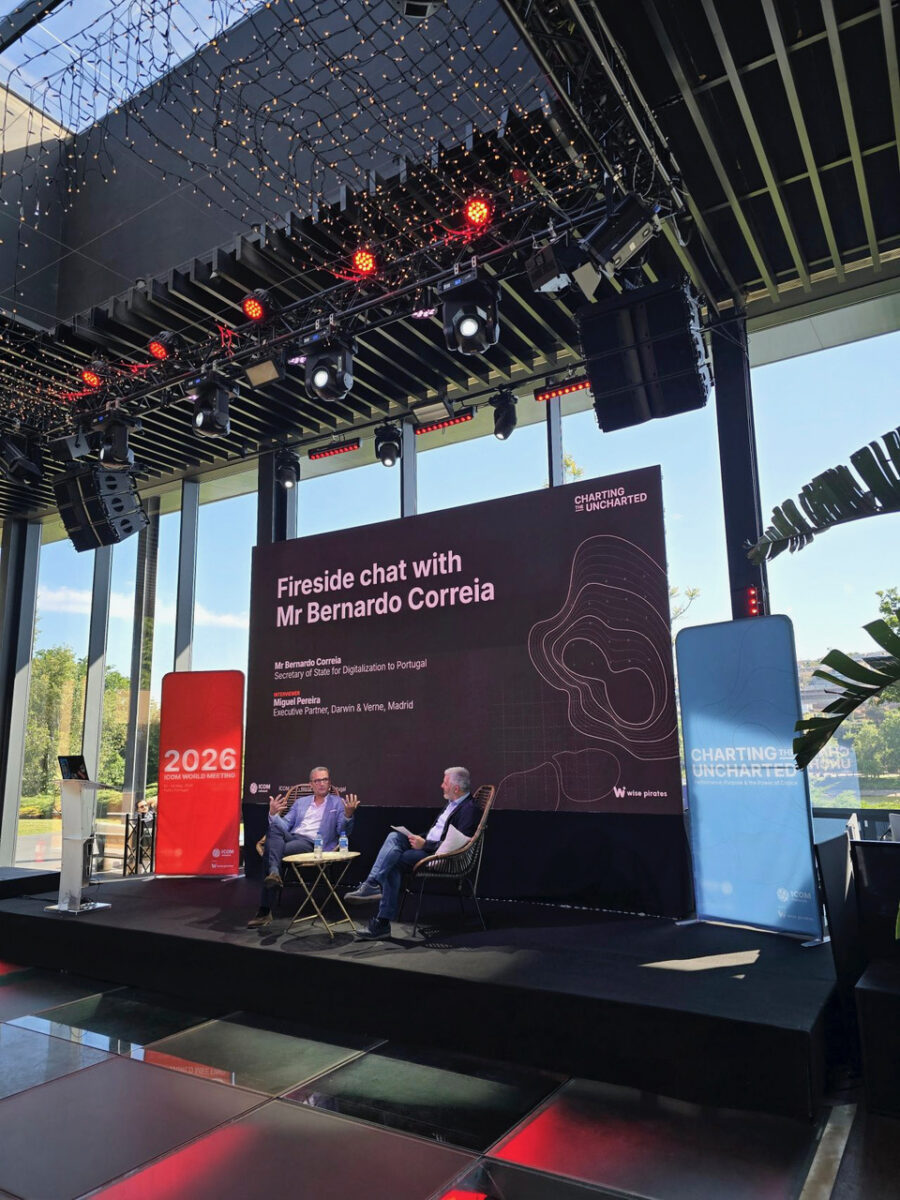
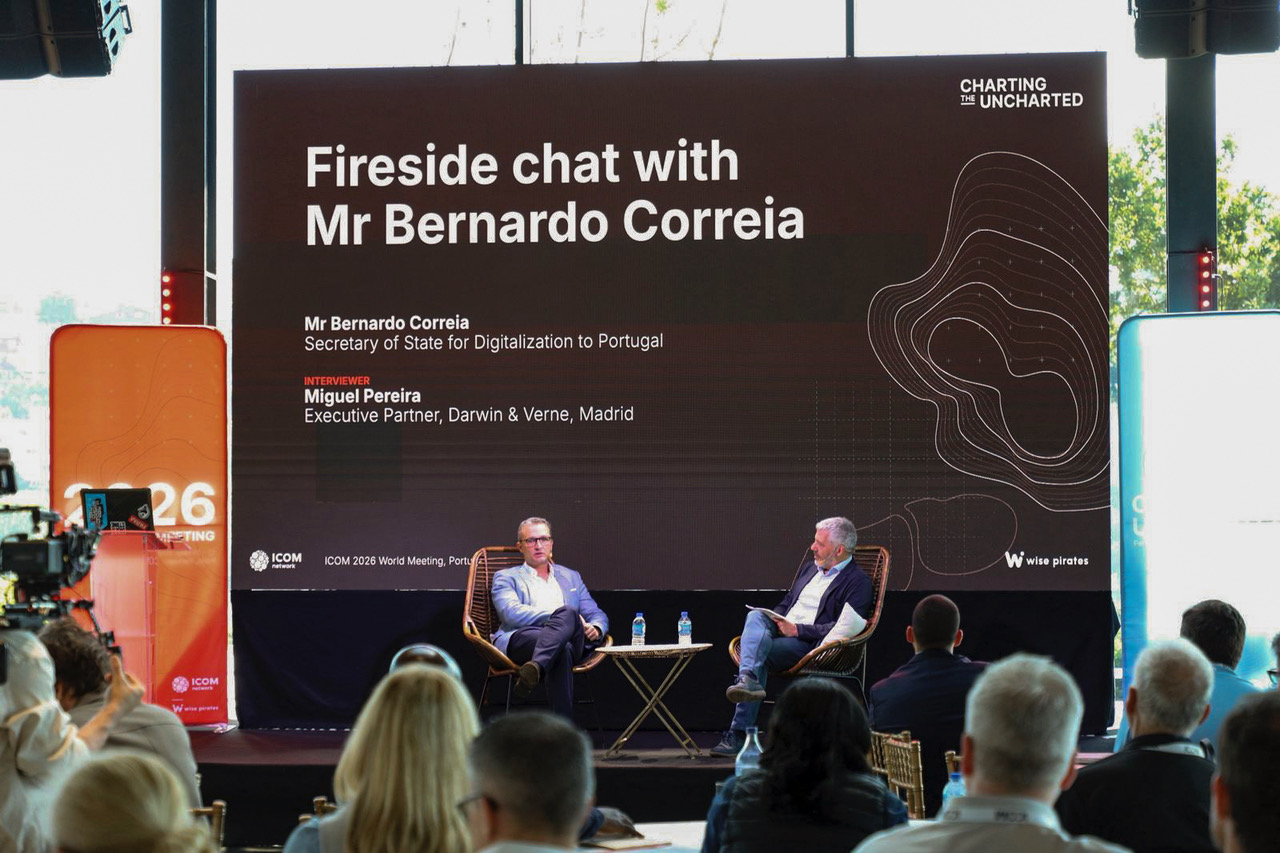
Last week, in Porto, I had the opportunity to interview Bernardo Correia, Portugal’s Secretary of State for Digitalizationduring the annual conference of the global agency network ICOM Network. Dicho así, puede sonar a una conversación institucional. No lo fue del todo.
Bernardo does not speak about artificial intelligence from the distance of political discourse or from empty enthusiasm for the latest trendy tool. Before joining the Portuguese government, he was Managing Director of Google Portugal, held international roles at Google and Unilever, and spent much of his career close to marketing, technology, creativity and business transformation. And it shows.
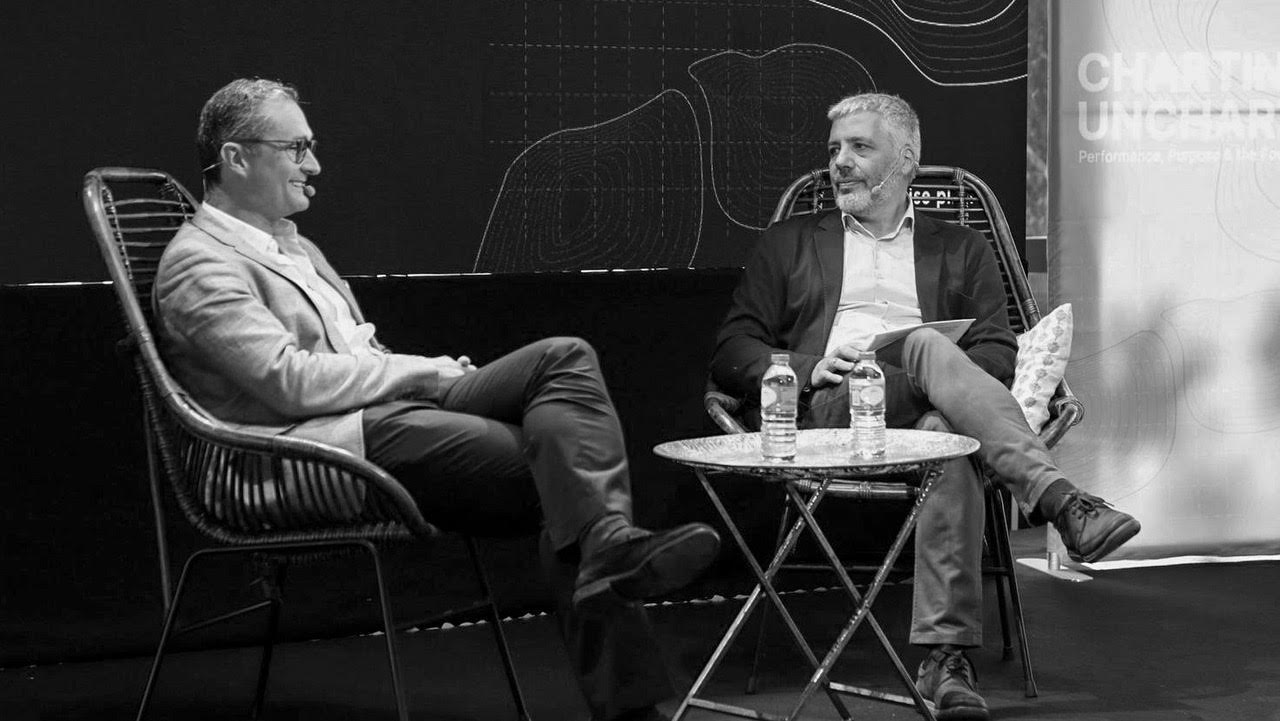
The conversation started from a question that many independent agencies are asking themselves right now: if for decades we have built value around talent, creativity, time and client trust, what happens when artificial intelligence begins to disrupt all four at the same time?
Porque la IA no está cambiando solo las herramientas. Está cambiando la economía del trabajo creativo. Cambia cómo producimos, cómo pensamos, cómo cobramos, cómo nos diferenciamos, cómo formamos equipos y cómo demostramos valor. Por eso enfoqué la entrevista no como una conversación sobre promptsautomation or productivity, but around a deeper question: what should agencies become in a world where execution will increasingly be faster, cheaper and more automated?.
One of Bernardo’s first ideas was, for me, one of the most important: we are still thinking about technology in a linear way..
We see what a tool can do today, imagine that in six months it will do something similar but slightly better, and we build our plans around that progression. The problem is that AI is not behaving like that. As Bernardo pointed out, the evolution of AI follows exponential curves.
Many agencies plan the future based on a snapshot of the present. We look at what AI can do today and believe we already understand the threat or the opportunity. But the interesting question is not what it can do now, but what will happen when what seems surprising today becomes standard, cheap and accessible to everyone.
That led us to one of the creative industry’s greatest fears: uniformity.
If we all have access to the same tools, what will differentiate us? Don’t we risk ending up in an ocean of correct, efficient and perfectly forgettable content? Campaigns that look alike. Brands that speak the same way.
Bernardo’s answer was very clear: differentiation is not in the tool, but in the human intention that guides it..
“Uniformity” does not appear because AI exists. It appears when we use technology as a hammer. When we confuse production with thinking. When we become fascinated by technical novelty and forget the most basic question: what human problem are we trying to solve? We are still building technology for humans, not for robots.
It sounds obvious, but it is not. In the middle of the fascination with AI, many organizations risk falling in love with the process and forgetting the person on the other side: the client, the consumer, the user. And here agencies have a huge opportunity, because of our ability to understand human tensions, desires, contradictions, fears, aspirations and behaviours. AI can generate a thousand variations. But it cannot decide on its own which one matters. That is where our work begins.
Another reflection that seemed especially relevant to me has to do with the economic model of agencies. For years, many of us have sold expert time: hours of strategy, creativity, design, production and management. But what happens when many of those hours are drastically reduced? What happens when clients perceive that part of the execution has become faster, cheaper and more accessible? We can deny the tension, but it will not disappear.
Bernardo pointed towards an interesting path: agencies need to move closer to product thinking, business innovation and measurable impact. It is not only about helping clients communicate better what they already have. It is about helping them think about what they should build, how they could better serve their customers, what new experiences they could design and how technology can open new territories.
In other words: fewer production suppliers, more growth partners. More judgment. More strategy. More business. More product. More impact.
We also talked about talent. I asked Bernardo to name three capabilities that an agency should develop over the next twelve months. He did not give me three. He gave me one that is worth all three: curiosity.
And it makes sense. In an environment where tools change every few weeks, training teams only in specific functionalities is necessary, but insufficient. What seems advanced today will be basic tomorrow. Curiosity, on the other hand, ages much better.
A curious person tests, asks questions, compares, makes mistakes, learns and connects ideas. They do not wait for someone to give them permission to explore. They do not get blocked because a tool changes. They do not limit themselves to following an inherited process.
Bernardo also brought this into the field of organizational transformation: it is not about training everyone in the same way, but about identifying the true agents of change and giving them real power. Not a nice title. Not symbolic responsibility. Real power: resources, time, mandate and the ability to influence.
For independent agencies, this idea is especially useful. In teams of 20, 40 or 100 people, cultural change can happen quickly if the right people are activated. Sometimes you do not need to transform the whole organization at once. You need to find those who already want to move and remove the obstacles in their way.
Towards the end of the conversation, another idea emerged that I believe is essential for the future of leadership in our sector: we need people who deeply understand technology, but who are also capable of translating it onto a human scale.
That combination is difficult to find. There are profiles that understand technology, but not always people. And there are creative or strategic profiles who deeply understand culture, emotions and markets, but feel uncomfortable in the face of technological complexity. This is precisely the positioning of Phileas: the convergence of both capabilities.
The leadership ahead requires connecting both worlds. It is not about turning every leader into an engineer. Nor about leaving technology in the hands of isolated specialists. It is about building hybrid judgment: understanding enough about AI, data, business, regulation and human behaviour to make better decisions.
I left the interview reaffirmed in my feeling that artificial intelligence is not a conversation about tools, but a conversation about value.
About which parts of our work will become commoditized and which parts will become more important than ever. About what it means to be creative when production becomes easier. About how to lead teams when learning no longer has a clear finish line.
For agencies, the message is obvious: we cannot limit ourselves to using AI to do the same things slightly faster. That will be necessary, but not enough. The real opportunity lies in using it to elevate our role: to think better, understand better, design better, collaborate better and create more impact for our clients.
Thanks to Pedro Barbosa from Wise Pirates for making this interview possible; to Emma Keenan for inviting me to host it; and to ICOM Network for creating spaces for conversation and debate as interesting as this one.