Postgraduate Education. An Ecosystem of Experiences.

- Date
- Written by Fernando Alonso-Cortés
By now, the concept of lifelong learning is far from new. On the contrary, it is already deeply ingrained among professionals. The evolution of companies—driven by technological disruptions and new business models—poses a challenge for executives and managers, reminding us all of the need to stay relevant.
In this context, the decision to update one’s skills and absorb new management ideas and trends cannot be left to others. And the postgraduate training sector—master’s degrees and executive programs—has risen to the occasion, experiencing explosive growth in recent years. This growth has been further accelerated by the influx of investment funds acquiring stakes in the main players.
The result: an extremely competitive sector where the quality and depth of the academic offering is no longer sufficiently differentiating. Professionals no longer seek only degrees from reputable institutions; they look for formative experiences that help them stand out. In this scenario, Customer Experience can contribute significantly by adding substantial value.
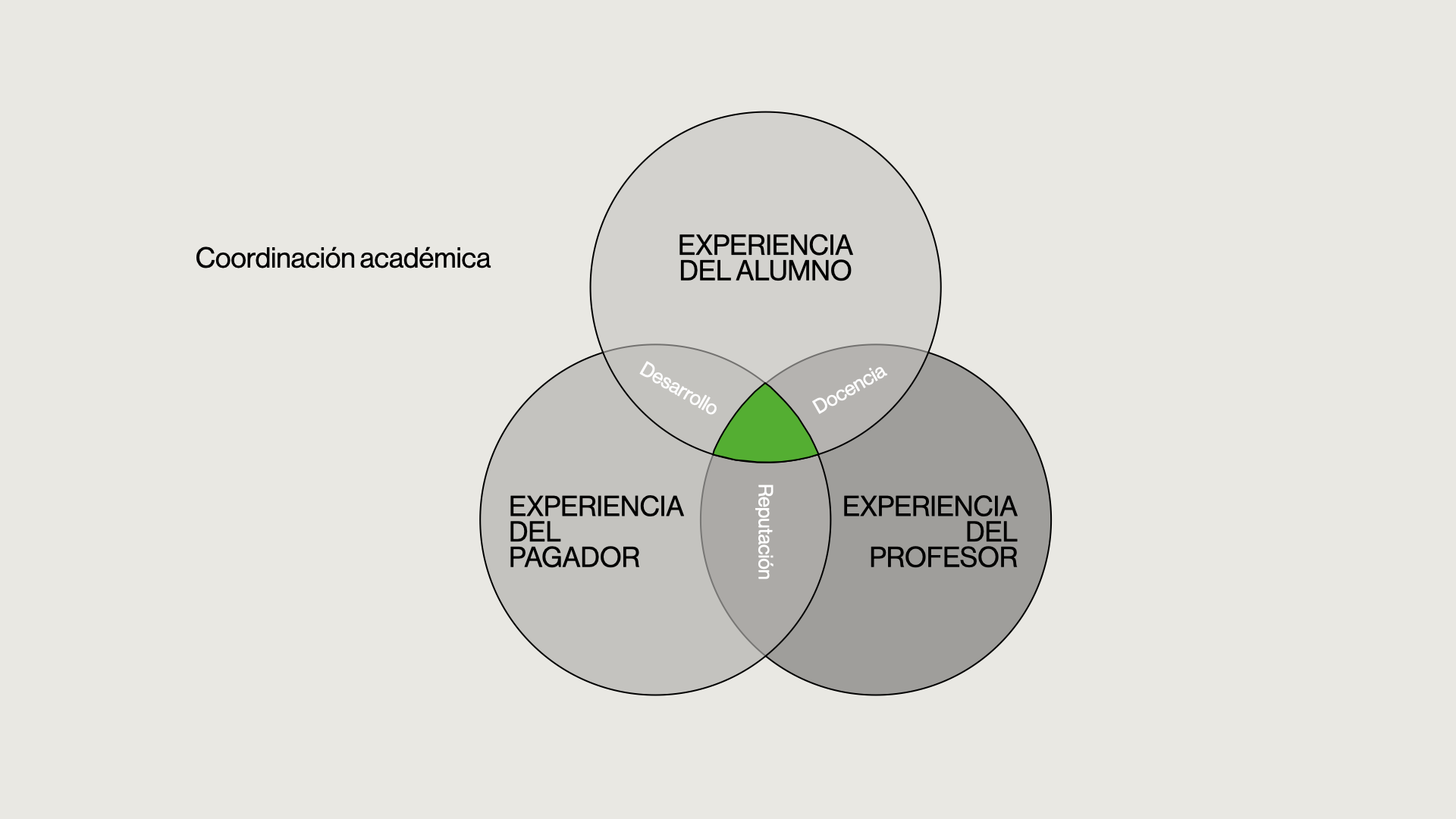
Uniquely, postgraduate education brings together three distinct experiences, lived by three key actors::
- The professional, who pursues the program to boost their career, acquire new capabilities, or redirect their professional path.
- The payer, whether the participant themself or their employer, who finances the program with clear expectations of return.
- The faculty, who not only teach from experience but also provide credibility and reputation.
The experiences of these three groups are deeply interconnected. Together, they form an ecosystem that feeds itself and can generate truly distinctive value for all parties.
The Student Experience:
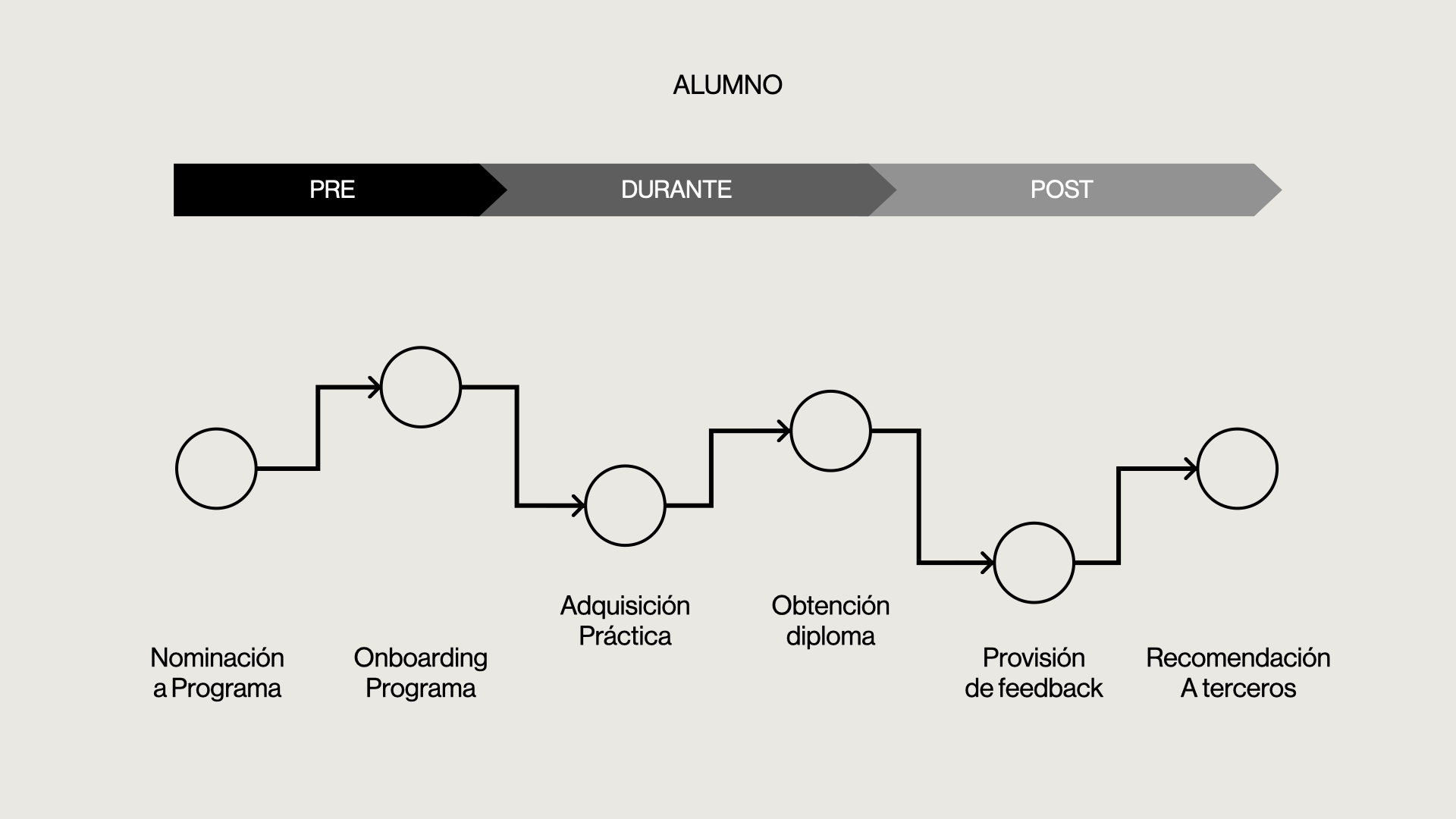
A participant in a postgraduate program goes through an intense and demanding customer journey—parallel to their daily professional life—that spans from researching and selecting the school and program (or vice versa) to attending classes and obtaining the diploma. Often, the journey continues afterward with community-building activities (alumni associations, investment clubs…).
Beyond the functional added value inherent to a program—its content and its faculty—the social and emotional value can be crucial to standing out and, above all, encouraging recommendation and word of mouth.
The case method is no longer a differentiating factor. It has become a sort of commodity. Students now value more innovative learning experiences, such as:
- Some schools are promoting action learning consisting of real consulting projects throughout the program:
EDHEC has made action learning the backbone of its program: long-term consulting projects, hackathons with companies, and challenges where students tackle real problems for partner organizations.https://mbagradschools.com/mba-industry-trends/edhec-mba-action-learning
- Some schools are promoting action learning consisting of real consulting projects throughout the program:
- Others offer immersive field courses, que son mucho más que viajes académicos. Tanto para hacer tours por empresas referentes en zonas emblemáticas como Silicon Valley.
HBS complementa el método del caso con un sistema de Immersive Field Courses (IFC) y proyectos globales donde los alumnos viajan y trabajan sobre retos reales durante el January term y otros momentos del programa.https://www.hbs.edu/mba/academic-experience/the-field-method
- Others offer immersive field courses, que son mucho más que viajes académicos. Tanto para hacer tours por empresas referentes en zonas emblemáticas como Silicon Valley.
These and other models offer intensive contexts where shared learning experiences build strong multicultural social bonds that generate deep emotional impact.
2. The Payer Experience:
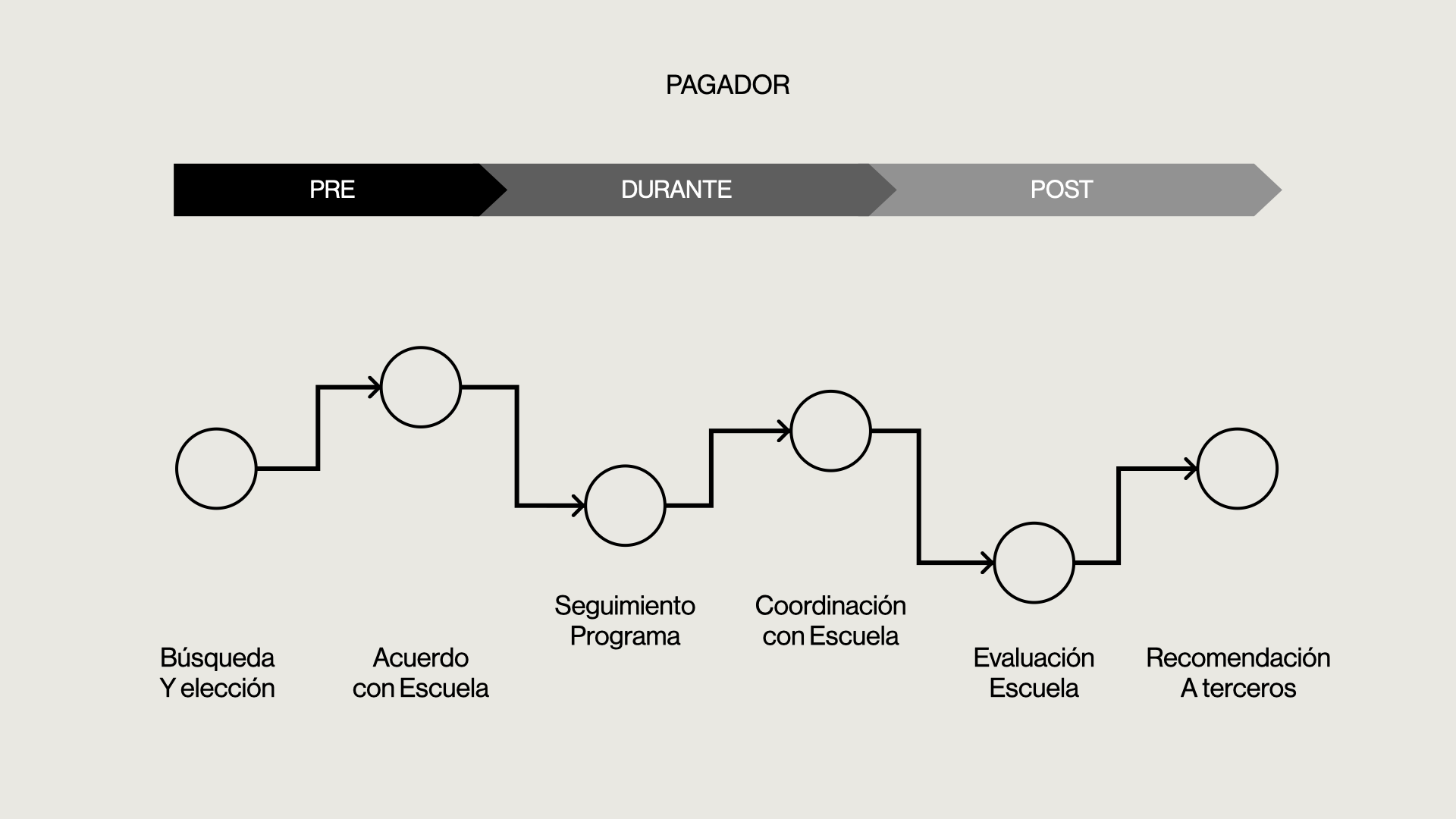
The payer(s) of a postgraduate program also go through a unique process. It is expected that higher costs will entail greater reflection and potentially discussion or deliberation—and certainly more involvement in the decision—especially when the individual is self-financing the program.
The payer’s journey requires transparency and substantial support before, during, and after the program—not only regarding financing options but also, for example, taxation.
Loans and incentivized payment methods are no longer sufficiently differentiating, even when offered through partnerships with financial institutions. Scholarships and grants may contribute, though their scope is limited.
- Some schools offer innovative, progressive mechanisms aligned with expected future income increases resulting from completing the postgraduate program, known as Income Share Agreements (ISAs).
IE University in Spain offers Income Share Agreements that eliminate upfront costs. The agreement allows graduates to share a percentage of future earnings once they surpass a defined income threshold.
https://www.ie.edu/es/ayuda-financiera/masters/prestamos/
- Other schools offer exclusive, customized programs for companies that invest in employee training and assume those costs as a way to maximize return on investment.
For example, MIT Sloan School of Management offers custom programs co-designed based on the specific challenges of organizations (innovation, digital transformation, growth, etc.)
https://executive.mit.edu/solutions-for-organizations/custom-programs.html
These and other facilitation mechanisms can help create a virtuous cycle: companies finance more employees, who become more loyal to the organization and, in turn, generate higher levels of recommendation.
3. The Faculty Experience: The Decisive Factor in Program Quality.
The faculty of a postgraduate program ultimately sustains the program’s quality. A mix of executives, entrepreneurs, and academic professors collectively contributes to the program. Individually, their own experience can significantly influence the prior two, as their lived experience permeates their teaching. Their satisfaction influences students directly. A motivated, well-prepared, and well-supported professor generates memorable classes, high-quality debates, and strong learning impact.
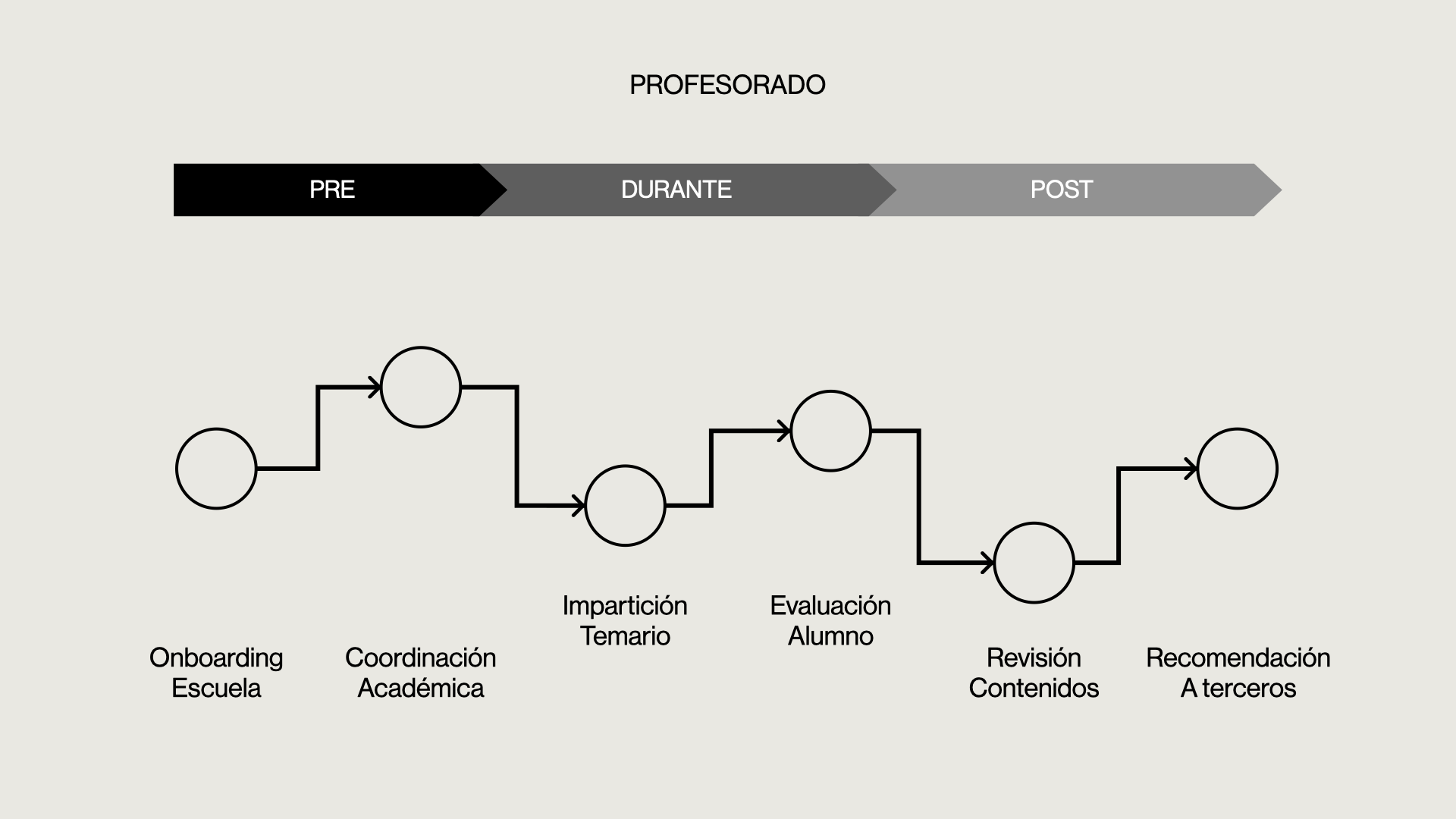
The faculty journey must be intentionally planned by the institution: from nomination, onboarding, and teaching support to post-program evaluation.
- Institutions that innovate collaboratively, implementing initiatives in which new professors are selected with the aim of co-designing the teaching experience.
Minerva University, an innovative institution, identifies professors through specialized evaluators who assess not only knowledge but also the ability to activate student participation. They invite faculty to help shape the future of teaching.
https://www.minervaproject.com/team - Schools promoting teaching development programs where professors and students collaborate on Experience-improvement initiatives.
For example, Columbia University fosters student-centric teaching through workshops involving both faculty and students.
https://tdp.ctl.columbia.edu/
In postgraduate education, professors also serve as the institution’s first brand ambassadors: their satisfaction influences their willingness to recommend the school or attract new candidates.
In summary, Customer Experience in Postgraduate Education is a multidimensional strategic factor for academic institutions. Only by managing the experiences of students, the payers and facultyin an integrated and synchronized manner can a truly enriching ecosystem be created for all.