A brand is no longer communicated. It is demonstrated.

- Date
- Written by Fernando Alonso-Cortés
For decades, part of Marketing’s responsibility has focused on designing and managing what a company said about itself. Commercial communication—and, in some companies, corporate communication—was the CMO’s natural territory, while brand building was a core strategic objective of the role.
At the same time, what the company did after attracting the Customer was divided among Sales, Operations, Customer Service, Technology and other departments. Interactions with prospects and customers were allocated first according to the nature of the task—selling, providing a service and so on—and later according to their needs: gathering information, forming an opinion, making a purchase or resolving an issue.
In today’s Customer Era, this separation is no longer sustainable.
For consumers, a brand is not simply the one that speaks to them from its packaging or through a campaign, or the one they engage with on social media. It is also the one that answers their questions, helps them through an unfamiliar process, apologises when necessary, and thanks and rewards them for their loyalty.
Providing information, ensuring that digital assets and platforms work smoothly, the behaviour of salespeople, the contracting process, meeting promised deadlines, issuing clear invoices, resolving an issue or making it easy to cancel a service: all these tasks form part of a brand’s value proposition. They are also moments in which the brand ‘speaks’ to its Customers. Put another way, Experience is a form or extension of Communication—and one of its most credible forms, as a growing body of empirical evidence has long confirmed.
A campaign makes a brand promise that brings the chosen positioning to life. But it is the actual experience delivered by the brand that confirms or contradicts that promise. When Communication and Experience are not aligned from the design stage, the brand risks making a promise it cannot keep.
Every interaction builds—or destroys—a brand
Companies no longer control how their brands are perceived. Brand attributes emerge from the sum of the interactions a customer has before, during and after a purchase or contract. Proactive Communication creates a brand image; Experience leaves a brand imprint. Both build the brand when the associations they generate are positive. But if either creates negative associations, the brand suffers.
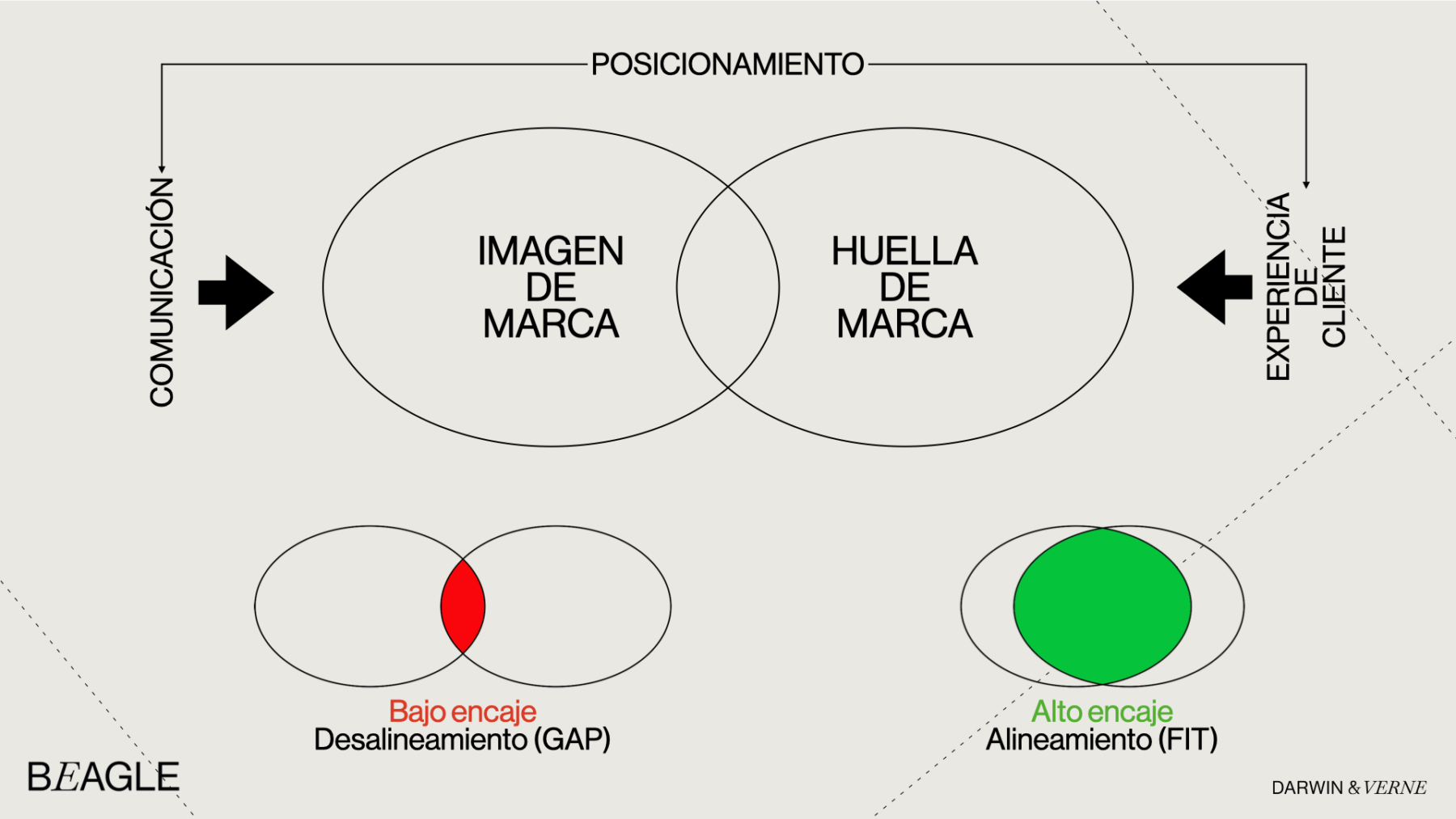
A company that positions itself as simple but forces customers through unnecessarily complex processes does not merely have an operational problem: it has a brand problem. A business that claims to be customer-centric but makes it difficult to cancel a service undermines its own credibility. And an organisation that promises personalised service but requires consumers to repeat the same information in every channel erodes the very trust it intended to build.
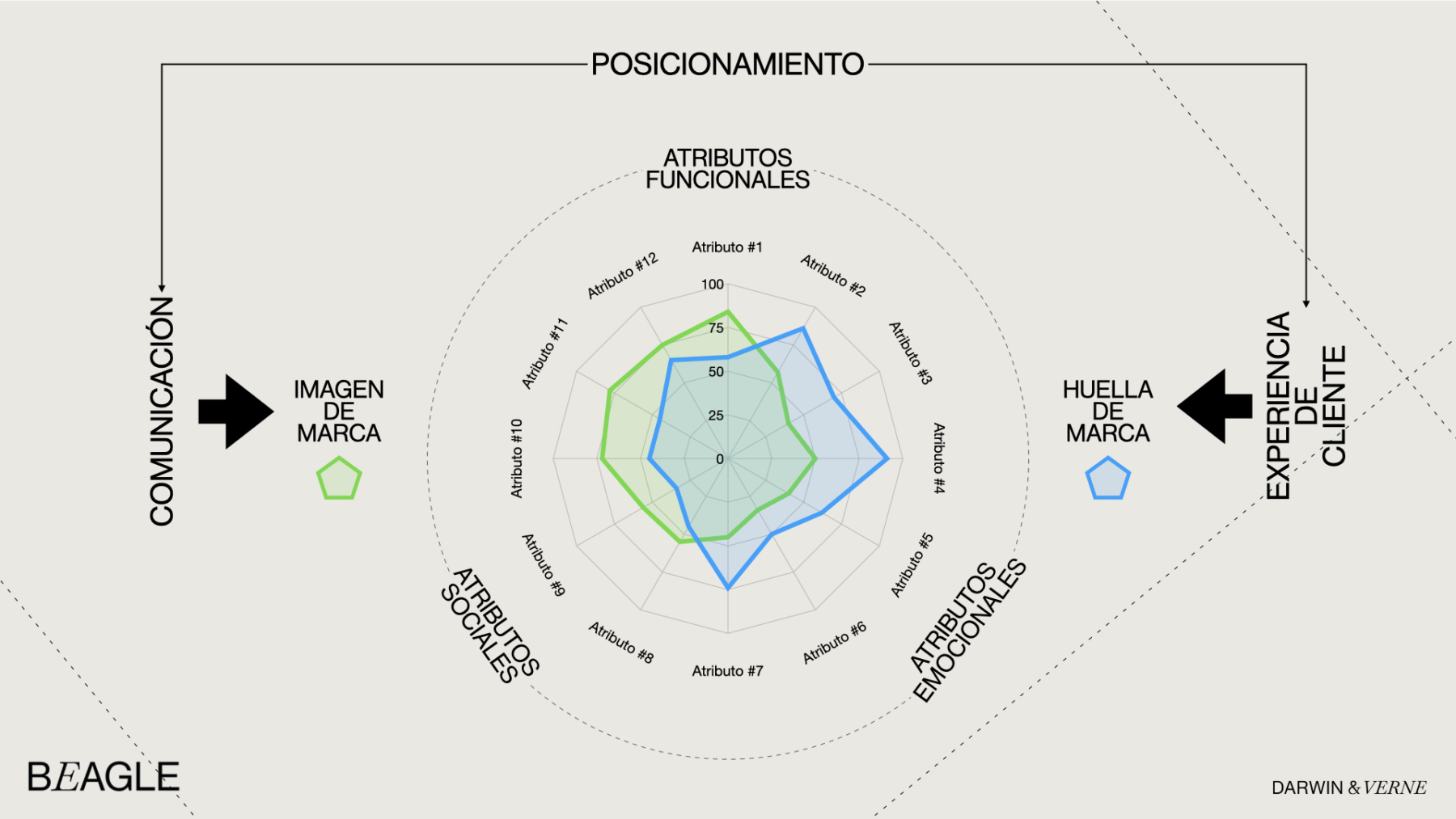
Customer Experience is therefore not a peripheral Marketing discipline. It is one of the mechanisms through which positioning becomes tangible.
The CMO’s remit is expanding
The evolution of the CMO role points in this direction. Marketing can no longer limit itself to generating awareness and image, with the aim of stimulating demand, only to then ‘hand over’ the customer to other areas of the organisation.
Numerous global consultancies and think tanks agree. To cite a few examples:
- McKinsey In its recent report, ‘The State of Marketing Europe 2026’, McKinsey ranks the integration of Marketing and Customer Experience among the CMO’s top ten priorities for ensuring brand consistency.
- Accenture speaks of closing the gap between the brand promise and the lived experience. Its research has found that leading companies are considerably more capable than their competitors of establishing a brand promise that is directly connected to the experiences they deliver.
- KPMG, meanwhile, stresses that the best experiences are not the accidental result of isolated departmental initiatives, but of the deliberate design of interactions. The firm explicitly connects customer expectations with the brand promise and with the organisation’s ability to fulfil it at every touchpoint.
- The CMO Survey, an initiative led by Deloitte, Duke University and the American Marketing Association, Deloitte, Duke University y la American Marketing Associationreports expectations of increased spending on Customer Experience and CRM. Marketing leaders anticipate growth in investment in both customer experience and relationship management services.
- This broader remit can also be seen in budget priorities. PwC notes that Marketing departments are increasing their investment in Customer Experience.
- According to data published by Forrester, Customer Experience is a top priority for global B2C marketing professionals, although only a small proportion of B2B professionals have so far integrated Marketing and CX into a single team.
- In Spain, specialist consultancy Scopen states that ‘a brand is no longer built exclusively through communication. It is built through experience, where every interaction matters: digital, physical, direct or indirect’.
Such a degree of convergence is difficult to ignore: experience should not be designed after the brand strategy; it should flow from it.
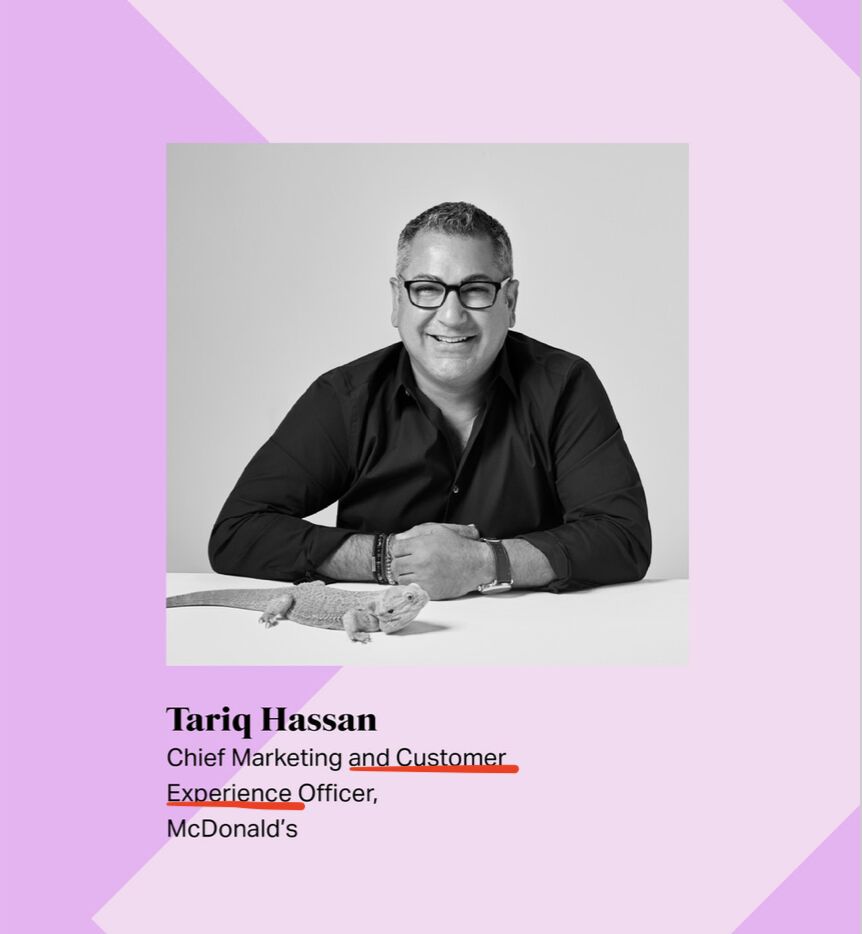
Although there is still no established integrated organisational model, some companies are beginning to introduce the role of Chief Marketing & Experience Manager. Examples include McDonald’s in the restaurant sector, ERGO in insurance and Airbnb in hospitality.
- Gartner notes that marketing leaders are taking on greater responsibility for the end-to-end customer experience and for business outcomes. The firm describes CMOs as evolving towards a role similar to that of a ‘chief customer officer’, with responsibility for understanding needs, behaviours, relationships and experiences.
- The Conference Board. After interviewing CEOs, CMOs and executive search firms, it concludes that the traditional CMO role is evolving towards titles that focus more explicitly on the customer, experience, growth and the business.
In any event, the absence of a single model does not change one conclusion: the CMO cannot remain on the sidelines..
The real question is not so much who appears on the organisational chart as the sole owner of experience, but who ensures that it remains consistent with the brand’s value proposition and positioning.
Professional associations endorse this evolution
The professional community is also beginning to publicly support this evolution. Professional associations from different fields have increasingly taken a position on the trend. For example:
- The American Marketing Association for years, has included customer experience in the debate about the role of Marketing. It argues that CMOs should develop and lead the strategic capability to map, audit and optimise the customer journey, while taking responsibility for strategically guiding the entire customer lifecycle.
- The European Marketing Confederation (EMC) already ranked Customer Experience Management among Marketing’s top three priorities in 2023. Its 2026 report now states that Marketing must move beyond a support role to become a catalyst linking strategy and execution, and connecting purpose with experience.
- Closer to home Spain’s Marketing Association (AMKT) introduced a Customer Experience category into its National Marketing Awards for the first time last year. In its own words, the category ‘recognises the ability to manage Customer perception and behaviour, align with brand strategy and use metrics that demonstrate impact’.

These and other examples confirm the shift: professional Marketing associations no longer present Customer Experience as a separate specialism, but as a capability required to compete, build relationships and sustain differentiation.
Leading does not mean doing everything
Arguing that the CMO should lead Experience does not mean making Marketing responsible for every operation or diminishing the importance of Sales, Customer Service or Technology.
The CMO cannot single-handedly control every touchpoint. But the role should be central to four responsibilities.
- The first is to translate positioning into experiencedesign principles: defining the behaviours that make the brand promise tangible in interactions with the Customer.
- The second is to safeguard the consistency of the Customer Journey. This means preventing each department from optimising its processes in isolation and ensuring that the entire Experience is designed from the customer’s perspective, rather than around the company’s internal capabilities or structure.
- The third is is to connect experience metrics with brand Awareness, consideration and image should be analysed alongside satisfaction, trust, effort and customer lifetime value
- The fourth is to bring the voice of the customer into strategic decision-making.Marketing has historically developed a privileged understanding of the market, of expectations and of the meanings consumers associate with the brand.
Advertising is no longer enough: brands have to prove themselves
The greatest risk of separating Communication and Experience is that a company ends up saying one thing and doing another. When this happens, advertising does not merely become less effective. It can amplify disappointment by raising expectations that the organisation is not prepared to meet. The result is a gap between expectation and experience.
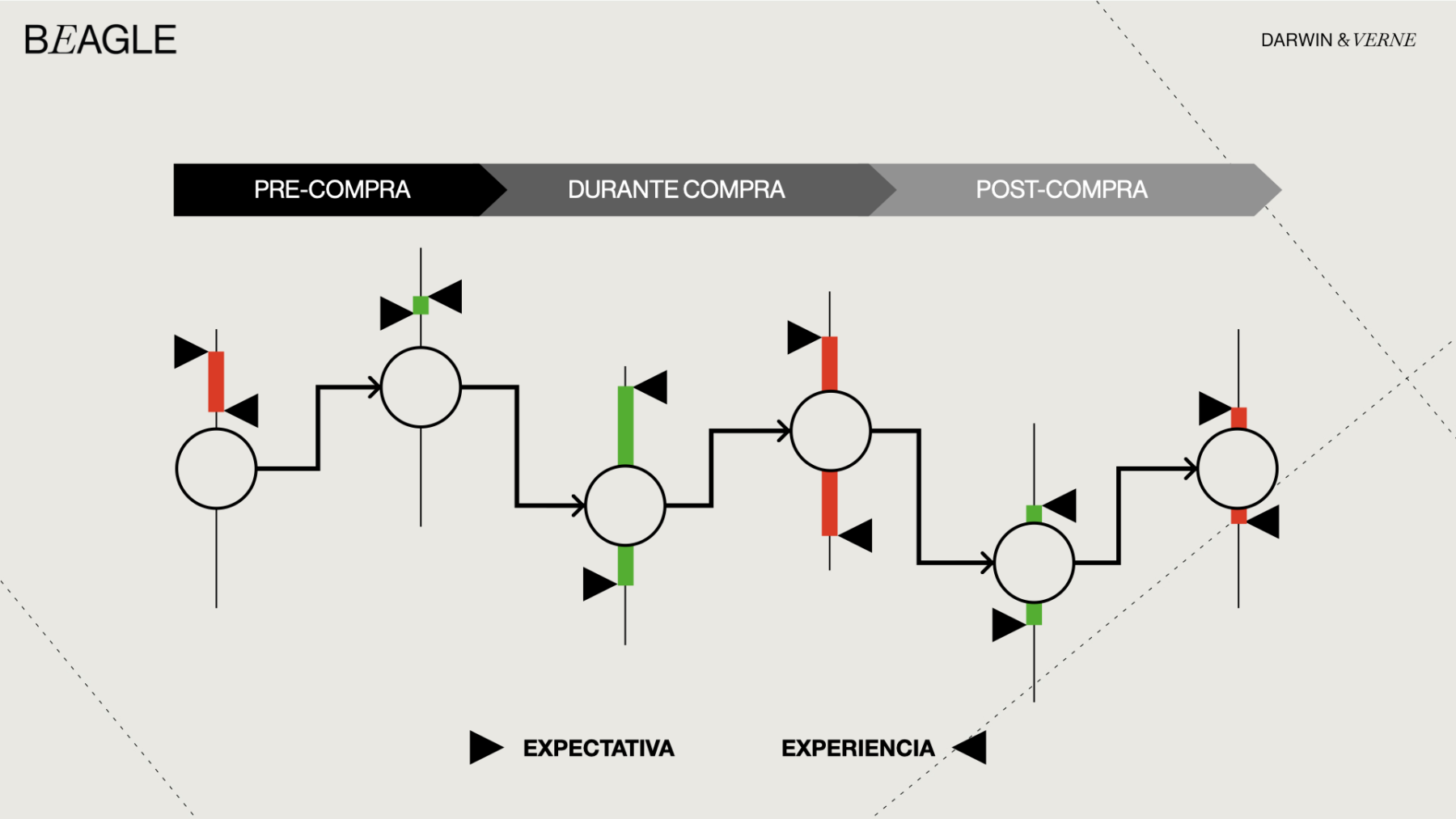
Conversely, when positioning, communication and experience are designed together, every interaction reinforces the brand promise. Advertising creates expectations; experience confirms them and generates trust; trust consolidates preference; and preference becomes loyalty, recommendation and long-term economic value.
Because Brand Equity is not built solely in the media. It is built through every search, every conversation, every purchase, every delivery, every invoice and every complaint.
And it can also be destroyed through any one of them.
In summary: convergence is becoming an unavoidable and increasingly tangible challenge
- Empirical evidence shows that customers build their perceptions of brands from the experiences those brands deliver, not from communication alone.
- Leading consultancies and associations agree that Marketing and Customer Experience must converge.
- The most advanced companies are changing their organisational structures to reflect this convergence, either by broadening the CMO’s responsibilities or by creating hybrid positions such as Chief Experience Officer or Chief Experience Officer & CMO.
Article originally published in Marketing News